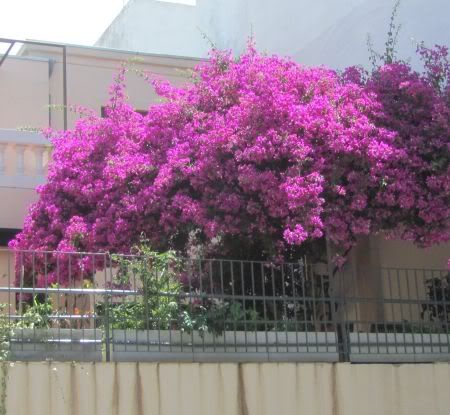
Sunday photoblogging - springtime in Buenos Aires


Labels: Argentina, Buenos Aires, Greece, Italy, Parque Saavedra, photoblogging, Porteños
Submit To PropellerTweet
[Permalink] 2 comments


Labels: Argentina, Buenos Aires, Greece, Italy, Parque Saavedra, photoblogging, Porteños
Submit To Propeller
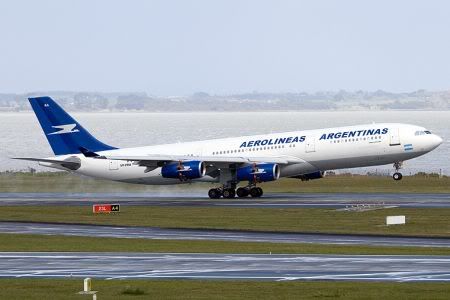
Argentina’s re-nationalized flag air carrier Aerolíneas Argentinas lost in July 48 million US dollars which is “a little bit more” than the same month a year ago when the company belonged to the Spanish tourism group Marsans, according to the company’s current CEO Mariano Recalde.
[...]
“In June 2008 revenue was 90 million US dollars and this year 50 million USD”, said Recalde adding that “June and July are the worst months for airlines in the southern hemisphere”, plus the fact that this year “we had a dramatic drop in winter tourism because of the A/H1N1 virus flu”.

The July loss “just above 48 million USD” and an average red of “33 million USD” admitted by CEO Recalde, with average revenue of 50 million USD in June, are indicating that income is only covering between 50 and 60% of costs..
Nevertheless Recalde insisted in his optimism in the future of the company since “under government management all indicators of Aerolíneas have improved significantly”. He added that when the crisis “which is hitting all airlines of the world is over, revenue is going to increase considerably”
Workers at the government's National Institute of Statistics call it crass manipulation: Their agency, under pressure from above, altered socioeconomic data to reflect numbers palatable to the presidency. Inflation and poverty miraculously dropped, they said in interviews, and the economy boomed.
At least officially.
"They just erased the real numbers," said Luciano Belforte, an 18-year veteran at the institute. "Reality did not matter."
The alleged manipulation, which is under investigation by anti-corruption prosecutors, has angered Argentines. But in a globalized world, where a pensioner in Italy might be as likely to invest in Argentina as in Fiat, the suspected modifications are being felt far beyond this city.
[...]
Economists say the official inflation rate of 8.5 percent in 2007 was really about 25 percent. In the 12 months ended this June, the INDEC put the rate at 5.3 percent, but economists say it might be three times higher. Argentina's vaunted economic growth this decade might have been exaggerated, too. Credit Suisse said the 7 percent expansion the government reported last year is likely 2 to 3 percent lower.
[...]
The controversy has raised questions about the government's official poverty figure. The INDEC's calculation is 15.3 percent; the Catholic Church says it is closer to 40 percent. After Pope Benedict XVI called poverty in Argentina a "scandal" this month, the government acknowledged that as many as 23 percent of Argentines might be poor.
Argentina’s flight of capital remains steady having reached 5.5 billion US dollars in the second quarter of the year, 11.2 billion in the first half and 43.1 billion US dollars since the second quarter of 2007, when the first signs of the global crisis, according to the latest data from the Argentine Central Bank.
However it has been below the peaks of the second quarter of 2008, when the farmers’ conflict with the Argentine government was at its highest point and at the end of last year when the Kirchner administration took over the private pensions’ savings funds.
The Central Bank also points out that some of the flight has been into hard currency deposits and “local corporations are using those funds to pay for the running of their businesses but from foreign accounts”.
Local economists point out that the deterioration of fiscal accounts, particularly the budget, and the possibility of a faster devaluation to help compensate the lack of revenue is making savers and companies put their monies in hard currency.
[...]
[E]conomics analyst centre Prefinex also believes that people fear the government will begin printing money to cover the fiscal deficit, which leads to a devaluation of the Peso and capital flight.
Econviews points out that the link between capital flight and a poor fiscal situation also worked inversely: lack of confidence encouraged capital flight which then generated less activity, less revenue and less fiscal abundance.
Over 800.000 Argentines left the country following the 2001 economic debacle, according to the latest report from the International Organization for Migration, which in the last decade represents 2.1% of total population.
[...]
Reference data shows that at the beginning of the XXth century an estimated 4.2 million immigrants from Italy, Spain, France and other European countries reached Argentina, but following a few years half of them returned. This means 2.2 million effectively remained in Argentina, which means that the exodus of the beginning of this century is equivalent to almost a third of that early last century massive influx.
However the latest data does not include the Argentines that have been forced to return because of the latest global economic crisis which has hit particularly hard Italy, Spain and the United States.
[...]
The local impact of this qualified emigration has been suffered by the Argentine private sector which has been forced to capacitate personnel and contract staff that can be reconverted.
Argentina paid creditors a total of 2.25 billion dollars on government-issued debt Monday, as it sought to shed the last vestiges of its 2001 default and return to the financial mainstream. Economy Minister Amado Boudou said the payment, or coupon, had been made to holders of dollar-denominated Boden 2012 bonds—meeting a debt obligation that aims to boost confidence.
"The coupon corresponding to Boden 2012 has been paid," said Boudou, adding that the country would now seek a return to global capital markets before the end of the year.
Argentina has been excluded from these markets since December 2001, when the country suffered an economic collapse wiping out personal savings, shredding government finances and prompting Buenos Aires to default on its debt.
In 2005 Argentina restructured its defaulted debt but there are still an estimated 20 billion dollars in holdouts plus a pending debt to the Paris Club of lenders of 6.5 billion. The country’s debt currently stands at 145 billion US dollars, plus the standing demands.
The Boden 2012 bond was issued in 2002 to compensate creditors who found access to their capital blocked during the 2001 freeze on bank withdrawals. It is estimated 65% of the bond issue is held outside Argentina and 35% locally.
Labels: Argentina, Argentina 2001 economic collapse, Argentina civil aviation, Cristina Fernandez de Kirchner, inflation, Porteños
Submit To Propeller
An 85-year-old woman and 55-year-old man were shot when Boca Junior fans fought among themselves before their team's match against Argentinos Juniors Sunday, an emergency services official said.
The woman, who had nothing to do with the supporters, was hit in the leg while the man suffered a serious head injury after he was also shot, Alberto Cresenti told the TN cable news channel.
The latest bout of Argentine football violence broke out near Boca's Bombonera stadium, situated in a working-class district just south of the center, around four hours before kick off.
Media reports said rival factions of the Boca supporters group known as The 12 clashed in an area of fast food restaurants known as Parque Lezama.
During the fighting, at least one man opened fire and four or five shots were heard, local media said. More than 100 people were reported to be involved in the fighting. Six were arrested.
It was the second successive week that rival factions of The 12 have fought before a game. Last week, dozens were arrested during a pitched battle before the game away to Independiente.
Labels: Argentina, Boca Juniors, Buenos Aires, fútbol, hooliganism, Porteños
Submit To Propeller

Labels: Comunidades y Viviendas, Porteños
Submit To Propeller
Labels: Argentina, Buenos Aires, Porteños, winter
Submit To Propeller

Power was rationed in parts of the Argentine capital and four people died from exposure as autumn temperatures dipped below freezing across a wide swath of Argentina on Tuesday morning.
Labels: Argentina, Buenos Aires, Porteños, winter
Submit To Propeller