Blog Flux Directory Subscribe in NewsGator Online Subscribe with Bloglines http://www.wikio.com Blog directory
And, yes, I DO take it personally
Mandy: Great blog!
Mark: Thanks to all the contributors on this blog. When I want to get information on the events that really matter, I come here.
Penny: I'm glad I found your blog (from a comment on Think Progress), it's comprehensive and very insightful.
Eric: Nice site....I enjoyed it and will be back.
nora kelly: I enjoy your site. Keep it up! I particularly like your insights on Latin America.
Alison: Loquacious as ever with a touch of elegance -- & right on target as usual!
"Everybody's worried about stopping terrorism. Well, there's a really easy way: stop participating in it."
- Noam Chomsky
Send tips and other comments to: profmarcus2010@yahoo.com

And, yes, I DO take it personally

Sunday, April 01, 2012

More on worker-owned businesses

as a follow-up to my post from last tuesday, here's a preview of a documentary to be released in july this year...
SHIFT CHANGE - Putting Democracy to Work - preview

At a time when many are disillusioned with big banks and big business, the economic crisis and growing inequality in our country, employee ownership offers a real solution for workers and communities. Shift Change: Putting Democracy to Work is a new documentary (to be released in July, 2012) that highlights worker-owned enterprises in North America and in Mondragon, Spain. The film couldn’t be more timely, as 2012 has been declared by the U.N. as the “International Year of the Cooperative.”

Labels: , , ,

Submit To Propeller


[Permalink] 0 comments

Tuesday, March 27, 2012

Worker-owned businesses

Photobucket

good stuff...
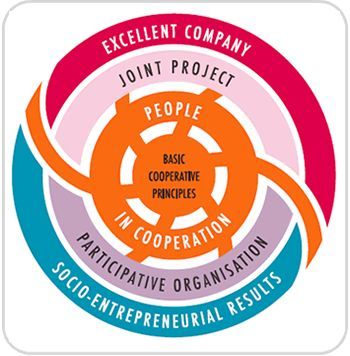
It may not be the revolution’s dawn, but it’s certainly a glint in the darkness. On Monday, this country’s largest industrial labor union teamed up with the world’s largest worker-cooperative to present a plan that would put people to work in labor-driven enterprises that build worker power and communities, too.

Titled “Sustainable Jobs, Sustainable Communities: The Union Co-op Model,” the organizational proposal released at a press conference on March 26 in Pittsburgh, draws on the fifty-five year experience of the Basque-based Mondragon worker cooperatives. To quote the document:

“In contrast to a Machiavellian economic system in which the ends justify any means, the union co-op model embraces the idea that both the ends and means are equally important, meaning that treating workers well and with dignity and sustaining communities are just as important as business growth and profitability.”

It might not sound like big news to members of their local food coop but it’s revolutionary stuff in the context of industrial production. The United Steelworkers represents some 1.2 million members; the average steel plant requires millions of dollars of investment, and there’s history here when it comes to worker ownership—some of it painful.

Thirty-five years ago, when local steelworkers and a statewide religious coalition put forward a plan to transfer the Youngstown Sheet and Tube steel mill to worker and community control, the USW’s attitude was very different. As recounted by Gar Alperovitz in his (recently updated) "America Beyond Capitalism:"

“In the late 1970s the union saw worker-ownership as a threat to organizing, and it opposed efforts by local steelworkers to explore employee-owned institution-building in cities like Youngstown.”

This Monday, Leo Gerard, forward-thinking president of a very new kind of international USW, had this to say:

“To survive the boom and bust, bubble-driven economic cycles fueled by Wall Street, we must look for new ways to create and sustain good jobs on Main Street…. Worker-ownership can provide the opportunity to figure out collective alternatives to layoffs, bankruptcies, and closings.”

“The union’s gone through a huge transition,” Alperovitz told me when I reached him at his office shortly after the press conference. “This is a real declaration of a new direction for labor.”

It’s been a few years since the USW first became curious about the Mondragon cooperatives after they had a good experience working with GAMESA, a co-op friendly Spanish wind turbine outfit that opened up three plants in Pennsylvania. In 2009, with their Spanish colleagues' help, Gerard sent a delegation to the Basque region of Spain to investigate Mondragon, now a $24 billion global operation. Since then, the USW has worked slowly with Mondragon and the Ohio Employee Ownership Center (OEOC) a university based coop-outreach center founded by one of the organizers of the Youngstown initiative, to fine tune the US version presented Monday.

i sincerely believe this this is the way things need to go... unfortunately, as long as the current model of capitalism remains the state-sponsored religion, it will never take off...

Labels: , , ,

Submit To Propeller


[Permalink] 0 comments

Saturday, June 18, 2011

The failure of social movements in the U.S.

since i'm on a number of liberal, progressive mailing lists (and, yes, a few conservative ones too), i'm astonished at the number of requests i get on a daily basis asking for my support in this or that cause, everything from saving the whales to preserving a free internet to "please support candidate x"... there's no critical mass on anything, particularly anything i would consider important... oh, yes, there are pleas to restore civil liberties, protests against shredding the 4th amendment, but nobody is lined up on anything... it's pathetic...

chomsky...

One failing of the social movements that I’ve noticed over many years is that while they are focusing on extremely crucial and important social issues like women’s rights, environmental protections, and so on, they have tended to ignore or downplay the economic and social crises faced by working people. It’s not that they are completely ignored, but they are downplayed. And that has to be overcome, and there are ways to do it. So, to take a concrete example right near where I live, right now there is a town near Boston where a multinational corporation is closing down a local plant because it’s not profitable enough from the point of view of the multinational. Members of the workforce have offered to purchase the plant and the equipment, and the multinational doesn’t want to do that; it would rather lose money than offer the opportunity for a worker self-managed plant that might well become successful. And the multinational has the power to do what it wants, of course. But sufficient popular support -- community support, activist support, and so on -- could swing the balance. Things like that are happening all over the country.

Take Obama’s virtual takeover of the auto industry. There were several options at that point. One option, which the Obama administration chose, was to restore the old order, assist in the closing of plants, the shifting of production abroad and so on, and maybe get a functioning auto industry again. Another option would have been to take over those plants -- plants that are being dismantled -- and convert them to things that are very badly needed in the country, like high-speed rail -- it’s a scandal that the United States doesn’t have this kind of infrastructure, which many other countries have developed. In fact at the very time that Obama was closing down plants in the Midwest, his transportation secretary was in Europe trying to get contracts from Spain for high-speed rail construction, which could have been done in those very plants that were being dismantled.

To move in the direction that I suggest would take substantial organization, community support, national support, and recognition that worker self-managed production aimed at real social needs is an option that can be pursued; if it is pursued, you move to a pretty radical stage of consciousness, and it could go on and on from there. Unfortunately, that was not even discussed.

chomsky's right... worker self-managed production that addresses the common good isn't even on the radar, and it's precisely a serious discussion on that topic that could be the game-changer we so desperately seek...

Labels: , , , , ,

Submit To Propeller


[Permalink] 0 comments

Sunday, August 16, 2009

Worker-owned and operated factories score a victory in ... ARGENTINA!

Photobucket

after cranking out the previous pretty uniformly gloomy post about argentina, i just so happened to run across the following, an article about a notable victory in the on-going battle of argentina workers for some justice and a bit of self-determination in the face of the horrendous abuses of the wave of privatization and summary firings that took place in the late 90s and early 00s...

The workers at Argentina's occupied ceramics factory, FASINPAT (Factory Without a Boss), won a major victory this week: the factory now definitively belongs to the people in legal terms. The provincial legislature voted in favor of expropriating the ceramics factory and handing it over to the workers cooperative to manage legally and indefinitely. Since 2001, the workers at Zanon have fought for legal recognition of worker control at Latin America's largest ceramics factory which has created jobs, spearheaded community projects, supported social movements world-wide and shown the world that workers don't need bosses.

[...]

FASINPAT has operated under worker control since 2001 when Zanon's owners decided to close its doors and fire the workers without paying months of back pay or severance pay. Leading up to the massive layoffs and plant's closure, workers went on strike in 2000. The owner, Luis Zanon, with over 75 million dollars in debt to public and private creditors (including the World Bank for over 20 million dollars), fired en masse most of the workers and closed the factory in 2001-a bosses' lockout. In October 2001, workers declared the plant under worker control. The workers subsequently camped outside the factory for four months, pamphleteering and partially blocking a highway leading to the capital city of Neuquén. While the workers were camping outside the factory, a court ruled that the employees could sell off remaining stock. After the stock ran out, on March 2, 2002, the workers' assembly voted to start up production without a boss. Since the occupation, the workers renamed the factory FASINPAT (Factory without a Boss).

i tried to figure out the acronym FASINPAT and could only come up with "fabrica" (factory) "sin" (without) "patron" (patron?)...

when i was the general manager for the operations of an airline at a small airport, i used to tell the 34 folks who worked for me that they were perfectly capable of running things without a manager, ergo without me... steeped as they were in the u.s. form of patriarchal, authoritarian management, they simply couldn't imagine NOT having a manager... sigh...

Labels: , , , ,

Submit To Propeller


[Permalink] 0 comments